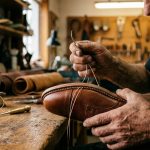
- Specialized Portuguese Heritage: Dedicated exploration of O Vidro Soprado Manual da Marinha Grande e Cristalaria Portuguesa, highlighting regional industrial clusters and multi-generational know-how.
- Hybrid Handcraft & High-Tech: Merging artisanal manual finishing with modern digital tolerances, CNC precision, and strict quality control.
- Rapid Sampling & Low MOQs: Accessible prototyping turnarounds and lower minimum production runs tailored for discerning global luxury brands.
- Complete European Compliance: 100% compliant with EU ESG benchmarks, ethical labor rights, and circular lifecycle tracing.
An in-depth investigation into O Vidro Soprado Manual da Marinha Grande e Cristalaria Portuguesa, examining how Portuguese master artisans and advanced manufacturing clusters unite centuries of heritage with rigorous modern sustainability and European export standards.
In an international industrial landscape increasingly crowded with homogenized, mass-produced goods, the enduring focus of Portuguese makers on authenticity and technical depth continues to capture global acclaim. The practice of O Vidro Soprado Manual da Marinha Grande e Cristalaria Portuguesa represents a quintessential embodiment of Portugal’s creative ethos—where deep historical memory is seamlessly coupled with state-of-the-art European manufacturing capabilities.
From the dense artisan workshops of the North to the sun-drenched studios of the Alentejo and Lisbon, Portuguese craftsmen approach their materials with an intimacy earned through decades of dedicated practice. Rather than competing in an unsustainable race to the bottom, these workshops prioritize durability, tactile refinement, and the creation of artifacts built to endure for generations. International buyers, creative directors, and luxury brand founders routinely marvel at the distinctive harmony between manual hand-finishing and high-precision computer engineering that characterizes contemporary Portuguese ateliers.
Unlike global manufacturing epicenters that rely on fragmented subcontracting chains spanning thousands of nautical miles, Portugal offers a remarkably dense geographic cluster model. Within a single afternoon drive through the Ave Valley, Felgueiras, or the Alcanena corridor, a creative director can consult with raw material sorters, master pattern cutters, toolmakers, and chemical engineers—iterating bespoke product concepts with extraordinary agility and direct personal accountability.
1. Generational Heritage & Material Sourcing Excellence
Every exceptional Portuguese creation begins with an uncompromising selection of raw materials. Whether working with long-staple organic yarns, vegetable-tanned full-grain crust leathers, monolithic agglomerated cork, or dense regional stone, master technicians inspect each element by hand. This sensory evaluation ensures structural symmetry, natural breathability, and an inherent resistance to degradation that synthetic substitutes simply cannot replicate.

Throughout Portugal’s industrial heartlands, knowledge is not merely documented in technical manuals; it is passed from parent to child across generational lines. Master cordwainers, weavers, bladesmiths, and stone masons possess a tacit comprehension of grain, tension, and thermal response that no computerized simulation can spontaneously replicate. This biological archive of skill grants Portuguese manufacturers an agile fluency in solving complex design challenges for global clients.
Consider the tactile nuances: how a master leather clicker reads the natural grain density of a French calfskin hide to ensure left and right panels stretch identically across a boot’s vamp, or how a Guimarães circular knitter calibrates yarn feeder tension to produce a heavyweight 450 GSM French terry that resists torquing through dozens of laundering cycles. These micro-decisions, performed thousands of times each working week, accumulate into a standard of tactile refinement that distinguishes authentic luxury from mass consumer disposability.
Furthermore, regional specialization reinforces this excellence. Different municipalities across Portugal have spent centuries cultivating hyper-specific material competencies: Guimarães and Barcelos in circular organic knits; Felgueiras and São João da Madeira in benchmade footwear; Alcanena in ecological vegetable tanning; Marinha Grande in blown glass and mold tooling; and the Alentejo in the generational stripping of virgin cork bark. This concentrated institutional memory provides international brands with a reliable foundation of expertise unavailable anywhere else in Western Europe.
2. Where Artisanal Touch Meets Digital Precision
Modern Portuguese workshops are far from archaic museum exhibits. Behind historic stone facades, cutting-edge facilities house five-axis CNC machining, ultrasonic fabric bonding, laser cutting tables, and automated spectrophotometers. The power of Portuguese manufacturing lies precisely in this harmony: computational machines handle heavy dimensional consistency, while master hands govern every aesthetic flourish, final stitch, and edge burnish.
“In Portugal, we do not view technology as a replacement for the artisan. We view advanced machinery as the ultimate set of precision tools that allow our master craftsmen to realize the most daring architectural and fashion visions.”
This hybrid workflow enables factories to achieve microscopic tolerances while preserving the tactile warmth that distinguishes true luxury goods. Design directors from Paris, London, Milan, and New York regularly travel to Portugal not only to inspect finished production runs, but to collaborate shoulder-to-shoulder with atelier directors during initial prototyping cycles.
In modern computer-assisted design suites, 3D digital patterns and virtual stress simulations can be adjusted in real time. Within hours, robotic cutting systems carve experimental prototypes from raw materials, which are then handed directly to veteran bench artisans for assembly and ergonomic testing. This tight feedback loop compresses collection development cycles from months into a handful of business weeks, allowing independent brands to respond to market demand with unparalleled agility.
Quality assurance protocols are similarly uncompromising. Rather than inspecting random sample batches upon completion, Portuguese facilities integrate multi-point inline inspections throughout every production stage. From spectrophotometric color-matching (ensuring dye batch variance remains strictly below Delta E 0.5) to tensile seam-burst testing and automated stitch-density counts, every garment, shoe, or furniture piece leaving the workshop floor meets or exceeds global luxury house specifications.
3. The European ESG & Traceability Imperative
As international regulations such as the EU Corporate Sustainability Due Diligence Directive (CSDDD) and Digital Product Passport frameworks come into full enforcement, supply chain opacity has become an unacceptable liability for luxury brands. Portuguese manufacturers have led the global transition toward transparent, circular production ecosystems.
With short logistical distances connecting suppliers, dyers, tanners, and packaging facilities within tight geographic corridors, the carbon footprint of Portuguese goods is dramatically lower than transcontinental supply chains. Factories run on clean renewable energy from Portugal’s extensive wind and solar grid, wastewater is rigorously treated in closed-loop biological facilities, and fair wages and workplace protections are guaranteed under strict European legal statutes.
Furthermore, Portuguese manufacturers were among the earliest European adopters of full chain-of-custody digital tracking. Through integrated ERP systems and blockchain-verifiable batch identifiers, international labels sourcing in Portugal receive comprehensive documentation covering every stage of their collection’s lifecycle: from the geographic origin of organic fibers and vegetable tanning extracts to the exact kilowatt-hour energy expenditure of the circular knitting or lasting machines.
This commitment to ethical governance also translates into social sustainability. Portugal’s manufacturing sectors pride themselves on multi-generational employment stability, fair collective bargaining agreements, comprehensive occupational health programs, and vocational apprentice schools. In an era where modern consumers demand absolute ethical integrity from their favored brands, “Made in Portugal” provides a powerful, unassailable stamp of authenticity.
4. Strategic Private Label Sourcing in Portugal
For independent designers, luxury conglomerates, and discerning lifestyle brands seeking to manufacture collections in Portugal, having verified on-the-ground representation is essential for success. Navigating specialized ateliers, negotiating low MOQs, and supervising multi-stage quality control requires dedicated industry expertise.
One of Portugal’s greatest commercial advantages is its accessibility for progressive, high-end brands that cannot satisfy the prohibitive minimum order quantities (often 5,000 to 10,000 units per colorway) demanded by Asian factories. Portuguese vertical mills and shoemakers routinely accommodate custom development runs starting at just 200 to 300 units, allowing designers to maintain exclusivity, eliminate catastrophic deadstock waste, and test specialized capsule collections without paralyzing cash flow.
Whether developing bespoke collections in sustainable textiles, benchmade footwear, or custom interior furniture, Portugal provides an unbeatable combination of European prestige, rapid prototyping turnaround, and unwavering material integrity. By establishing direct supply chain relationships with Portuguese makers, international fashion houses and design studios secure a formidable competitive advantage rooted in craft heritage, sustainable innovation, and enduring product quality.
The structured onboarding path for international brands typically follows five rigorous milestones: initial tech-pack audit and fabric swatching; physical counter-sample engineering within fourteen business days; pre-production fit testing and European dye laboratory approvals; staged inline manufacturing with bilingual technical inspection; and seamless export logistics with automated customs clearance. This structured pipeline eliminates operational friction, allowing emerging labels and established luxury houses alike to scale production with complete confidence.
As global consumer consciousness gravitates toward provenance, longevity, and ethical craftsmanship, the economic narrative around Portuguese industry continues to strengthen. Sourcing from Portugal is not merely an operational choice; it is an enduring brand statement that signals to your discerning clientele an unyielding commitment to European artisanal heritage, ecological responsibility, and uncompromising product excellence.
Ready to manufacture bespoke collections in Portugal?
Connect directly with verified manufacturing partners across Northern Portugal, Ave Valley, and Felgueiras for dedicated sampling and production.