- Net-Negative Carbon Footprint: For every single ton of cork harvested, the Portuguese Montado forest sequesters up to 73 tons of CO2 from the atmosphere.
- Steam-Autoclaved Purity: Dark expanded cork furniture blocks are formed using superheated steam, bound exclusively by the tree’s natural suberin resin without synthetic glues.
- Acoustic and Thermal Tranquility: Exceptional sound absorption (NRC > 0.85) and thermal insulation ideal for minimalist, cavernous architectural interiors.
- Comporta Architectural Movement: A tactile luxury dialogue fusing raw cork monoliths, rough-faced limestone, and natural sea-salt bleached pine.
South of the Tagus estuary, where the pine forests give way to the undulating sand dunes of Comporta and Melides, an architectural aesthetic has emerged that decisively rejects cold chrome and polished industrial polymers. Here, international tastemakers and visionary Portuguese architects have embraced an earthy, tactile serenity rooted entirely in local organic matter: expanded black agglomerate cork, local pale limestone, and sea-salt weathered pine.
At the center of this design revolution lies Quercus suber, the cork oak tree that blankets the vast plains of the Alentejo. Stripped by hand every nine years by skilled tiradores using precision axes, the tree is never felled. Instead, the harvest stimulates bark regeneration, supercharging the tree’s photosynthetic capacity and transforming the Portuguese Montado into one of the planet’s most vital carbon sink biomes.
The Alchemistry of Dark Agglomerated Cork: Zero Synthetic Resins
For centuries, the finest cork was reserved almost exclusively for sealing grand cru wine bottles. Today, Portuguese material engineers and industrial designers have unlocked the monolithic potential of expanded black cork. Rather than utilizing commercial urea-formaldehyde glues, granulated cork bark is placed into pressure autoclaves and blasted with clean industrial steam at over 300°C.
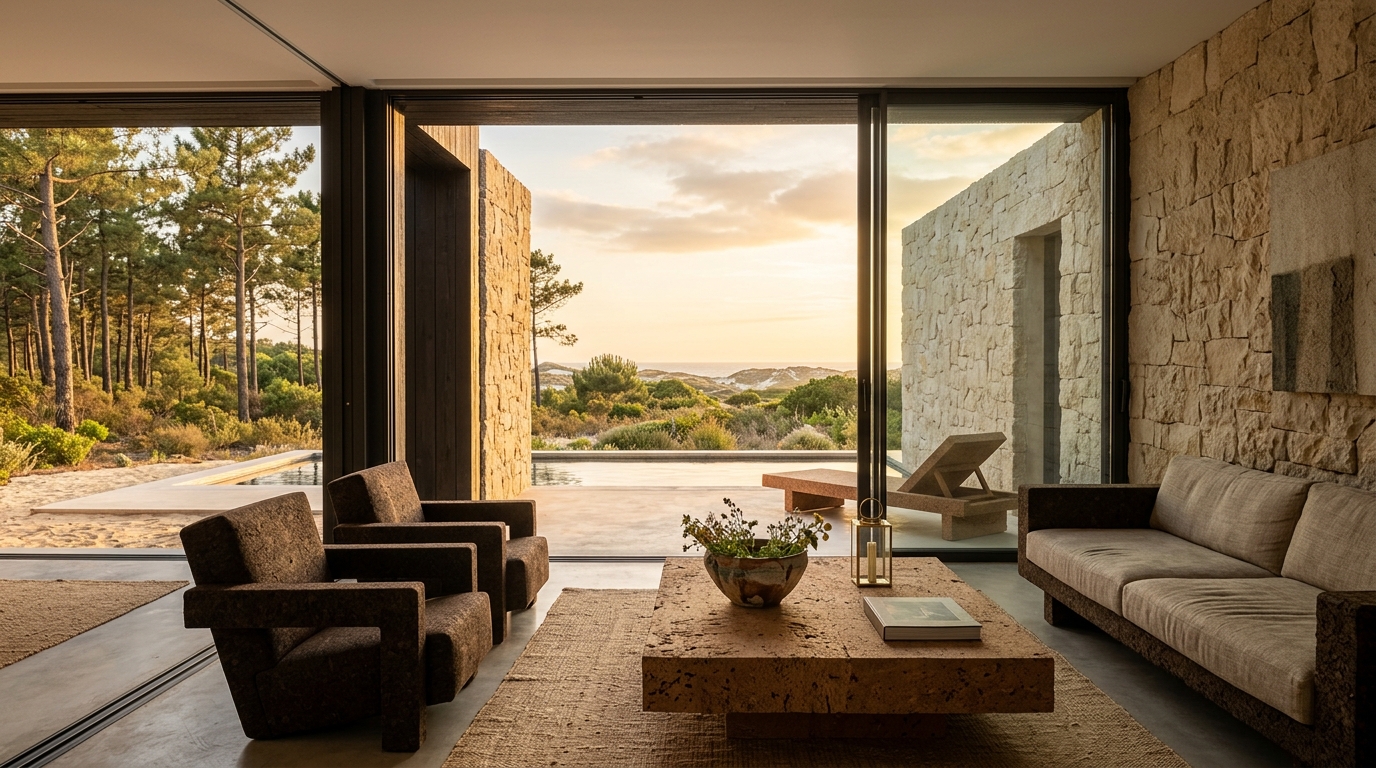
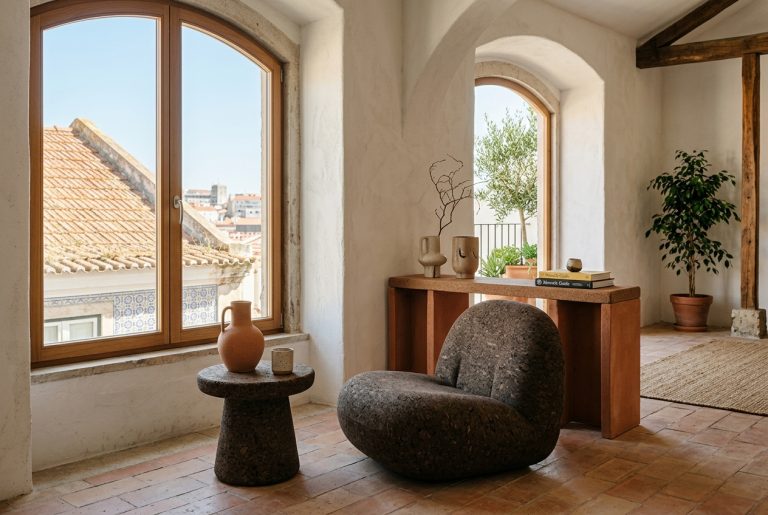
Under heat and pressure, the cork granules expand like popcorn and release their innate resin: suberin. This natural biological wax liquefies, fusing the granules into massive, dense, chocolate-colored blocks that smell subtly of toasted earth. The cured blocks are subsequently 5-axis CNC-milled and hand-finished into monolithic dining tables, sculptural low credenzas, and acoustic fluted wall louvers that are 100% biodegradable, water-repellent, and naturally fire-retardant.
The Tactile Dialogue: Pairing Cork with Caldas Ceramics and Estremoz Stone
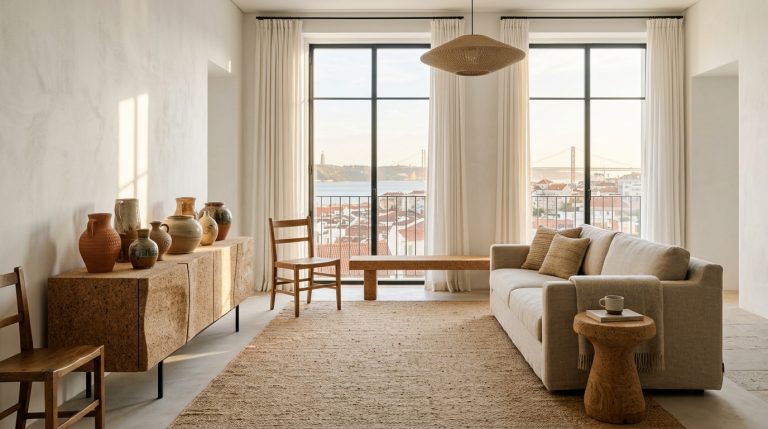
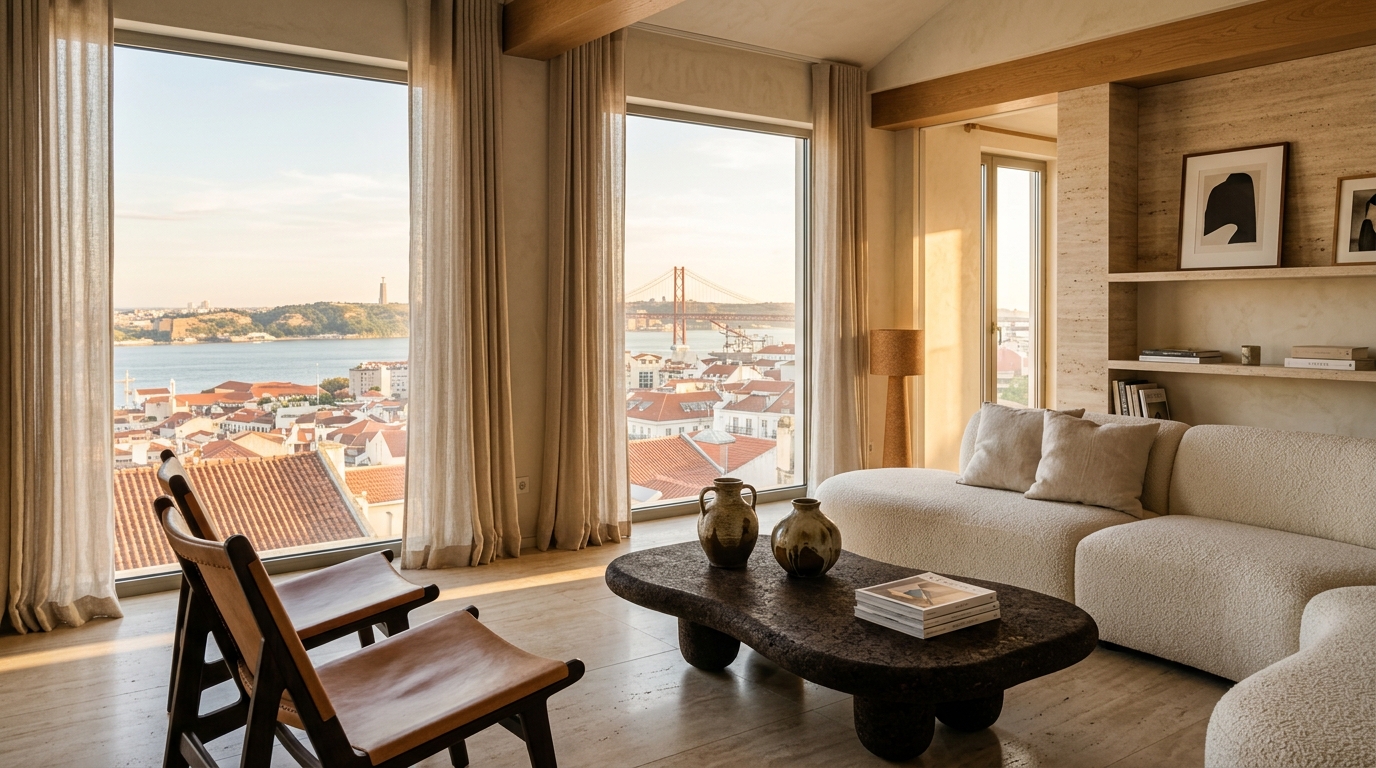
The interior beauty of Portuguese contemporary minimalism lies in its refusal to over-decorate. A single sculptural table carved from dark agglomerated cork commands an entire room when paired with smooth micro-cement floors and rough-hewn dry-stone walls. On its velvety matte surface, a single, glazed earthenware bowl from the legendary ateliers of Caldas da Rainha or an asymmetrical vessel carved from pink-veined Estremoz marble creates a composition of profound spatial balance.
“In Comporta, true luxury is acoustic and thermal calm. To live surrounded by Portuguese cork and native limestone is to live inside a sanctuary that actively breathes with nature.”
In addition to its visual warmth, monolithic cork possesses acoustic dampening qualities that solve the harsh flutter echoes common in glass-heavy modern villas. It absorbs high frequencies while diffusing lower acoustic registers, establishing an aura of monastic tranquility prized by authors, collectors, and discreet luxury homeowners worldwide.
Exporting the Portuguese Living Concept to Global Penthouses
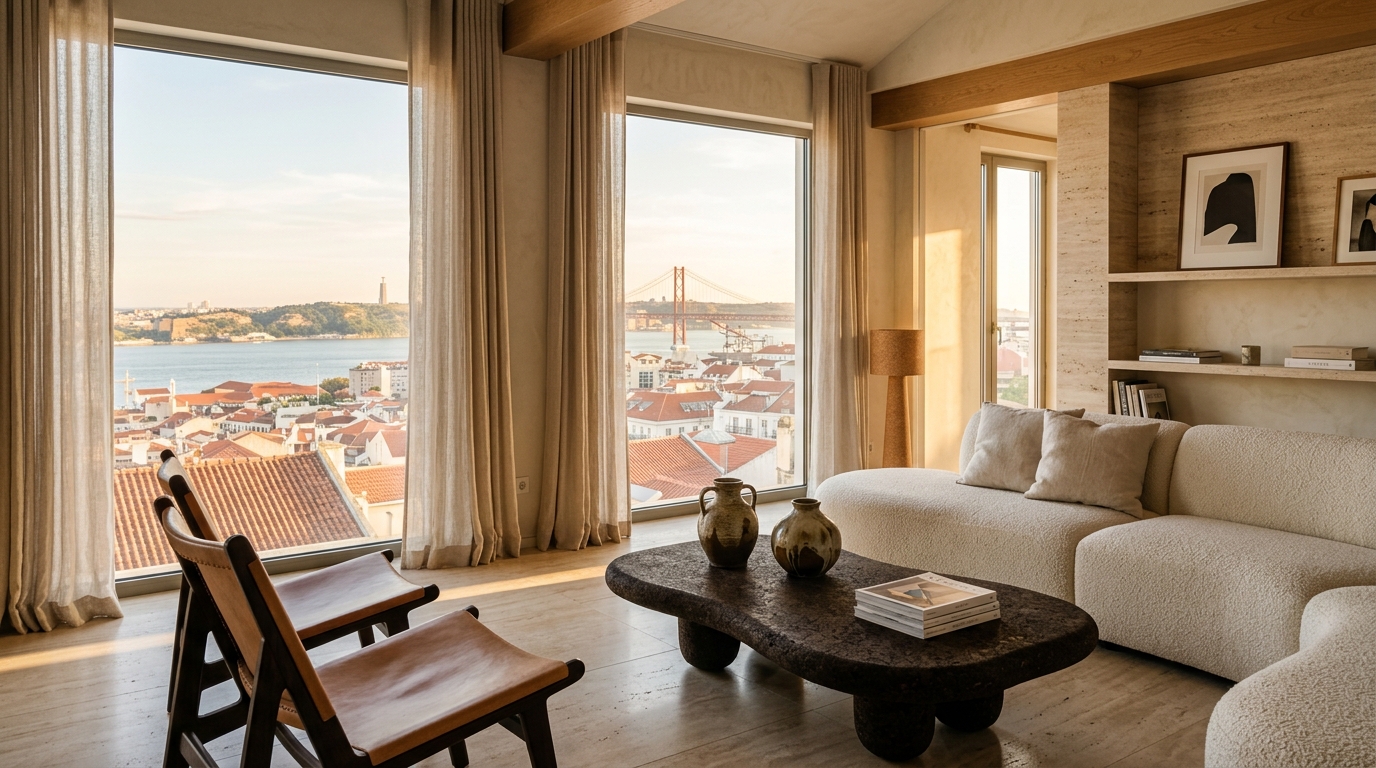
From private penthouses in Manhattan’s Tribeca to chalets in the Swiss Engadin and serene apartments in Tokyo’s Aoyama, international interior designers increasingly specify bespoke Portuguese cork furniture. The pieces provide an organic, tactile antidote to mass-produced flat-pack furnishings, asserting a timeless presence that deepens in character across generations.